"Aqueduct planning charms early, then the tech tree runs dry"
About
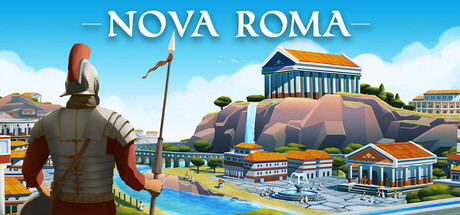
Nova Roma is a city builder set in Roman antiquity, the next game from Lion Shield after Kingdoms & Castles. You lay out housing, route supply chains, and keep citizens fed through granaries and farms, while a fervor system tied to temples and Roman gods gates your progression. The standout addition is water: aqueducts, dams, and elevation-aware flow physics that you have to plan around rather than ignore. There are difficulty options including a hard mode and a peaceful sandbox mode, plus raids and quests. It is in Early Access and not feature-complete.
Verdict
Nova Roma nails the part that matters most for a relaxing city builder: the first several hours of shaping a town and routing aqueducts across uneven ground are a pleasure, and the water physics are a real step up from the studio's earlier work. The problem is what comes after. The tech tree empties fast, the threats stay toothless, and fervor progression collapses into waiting on timers, so the systems that should carry the long game simply don't. It's an Early Access build with the bugs and frame drops to match, and whether it becomes more depends entirely on the roadmap. For now it's a charming, slightly hollow afternoon rather than a campaign you sink weeks into.
You'll like it if …
- +You build cities for the calm of a well-routed supply line, not for a challenge
- +Aqueducts and elevation-based water flow sound like a puzzle worth solving
- +You're comfortable buying into an Early Access game and growing with its updates
You'll dislike it if …
- −You want a city builder that keeps threatening your economy into the late game
- −Unlocking everything in a few hours kills your motivation to keep playing
- −Bugs and unexplained systems break your patience
Breakdown
- +The build-and-supply loop reads instantly; people describe sitting down and laying out a town for hours without checking a tutorial
- +Pacing early on is calm and legible, with progression that rewards tidy resource routing
- +Aqueduct routing and elevation give the placement decisions an actual spatial puzzle rather than just dropping buildings on flat ground
- −Once your economy stabilises the game stops pushing back, and hard mode does little to change that
- −Fervor often comes down to waiting on slow quest timers, which turns the late game into idle clock-watching
- −Raids and invasions don't generate enough pressure to keep the mid game tense
- +Water management with dams, flow and terrain elevation is the one system reviewers say genuinely rewards planning
- +God dedication and temple choices add a second layer on top of pure logistics
- +Long-session players (200+ hours) exist, suggesting the sandbox holds for people who build for its own sake
- −Several players had every building unlocked and placed within about three hours, leaving little to chase
- −Build variety is thin and meaningful choices dry up once the initial setup is done
- −No real endgame content to anchor extended play
- +The Roman framing and dedicating temples to specific gods give the systems a coherent theme
- +The classical-antiquity setting carries some charm on its own, red-tiled roofs and all
- −There is no story or scripted worldbuilding to speak of; the theme is dressing, not substance
- +The art direction wins people over, with clean, readable buildings and a warm classical look
- +The soundtrack is described as delightful, even if there isn't much of it
- −Frame rate sinks toward 30fps as populations grow into the mid and late game
- −The music runs out of tracks and starts repeating
- −Water and terrain visuals can be hard to parse, and small screens make building clarity worse
- +The UI is clear and onboarding is smooth enough that most people start building without friction
- +Polished for an Early Access release, more stable than the tag usually implies
- −Terrain generation mishandles rivers, which spill over in strange ways
- −Water physics bugs and occasional crashes leave some sessions unplayable
- −Key systems like fervor are underexplained, forcing trial and error to figure out what drives them
score