"Hand-cranked artillery that thunders, thin on what comes next"
About
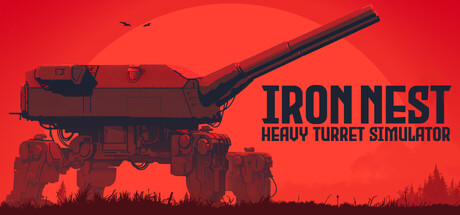
IRON NEST puts you inside a colossal dieselpunk siege gun during an alternate-history Spanish Civil War, serving the Castilian monarchists. High Command sends coordinates by typewriter, and your job is to turn them into fire: measure the map, triangulate the target, pick the right shell, then crank handwheels to gunlay the cannon by hand. You account for splash radius, heat management and even the Coriolis effect before pulling the lever. Missions arrive with newspapers and dark orders between them, and there's a cat you can dress up in your crew quarters. Skirmish and multiplayer modes are planned.
Verdict
IRON NEST nails the one thing it sets out to do: make firing an enormous gun feel like operating a real, heavy, dangerous machine. The steam-hissing handwheels and the thump of a shell finding its mark are worth the price on their own, and the satirical Castilian framing gives the work a grim edge. It's held back by a campaign that stops introducing new ideas early and by the absence of a mid-mission save, which turns crashes and slip-ups into lost time. Come for the ritual and the sound, temper your expectations on how long the loop stays fresh.
You'll like it if …
- +you want the ritual of measuring, calculating and hand-aiming before every shot
- +you'd rather be dropped into a machine and left to work it out than walked through a tutorial
- +audio-led immersion matters more to you than a deep progression tree
You'll dislike it if …
- −repeated precision tasks under time pressure start to feel like a chore for you
- −losing progress to a crash with no mid-mission save is a dealbreaker
- −you need a steady stream of new mechanics and unlocks to stay invested
Breakdown
- +The full sequence of reading coordinates, triangulating, loading and hand-cranking the gun builds toward a single lever pull, and the payoff of that hit lands hard
- +Pressure scales with the mission: some runs are a slow measured routine, others drown you in targets and force snap calls on heat and ammo
- +Manual gunlaying gives every shot a physical weight most artillery games skip
- −Once the novelty settles, shell-loading and dial-turning can read as busywork rather than decision-making
- −Waiting through the machinery for a single crater lands flat when a shot misses
- +A real spread of shell types, including the heavy INCN rounds, rewards matching ammunition to the target
- +Mission design varies the tempo enough to keep the calculation work from feeling identical
- +Planned skirmish and multiplayer modes point to more room than the campaign alone offers
- −Little turret progression or new systems open up, so the loop repeats its core beats fairly early
- −Players hunting long-term replay report the campaign runs shallow on fresh mechanics
- +Typewriter orders and post-mission newspapers carry a bleak satirical tone, including uncomfortable commands to fire on civilians
- +The monarchist-Castile framing and dieselpunk setting hang together cleanly without leaning on cutscenes
- −Story stays firmly in the background and won't hold anyone there on its own
- +Sound design is the standout: steam venting from the handwheels, the engine chug, the war horn and the boom of firing all sell the machine
- +Atmospheric, detailed interiors that make the gun feel like a place you operate
- +Runs smoothly across a range of hardware for most players
- −The loud military marching music wears thin over a session
- −A minority hit freezes, stutters and graphical bugs
- +No box-ticking tutorial: you learn by poking at the machine, which many find fits the fantasy of operating it
- −No mid-mission save means a crash or a late mistake costs the whole run
- −Crash reports during missions, including conflicts with recording software
- −The hands-off approach tips into frustration for players who never figure out a mechanic
- −Missing quality-of-life touches like dial automation leave repetitive adjustment on you
score