"Gorgeous grotesque odds-juggling, tripped up by unfair dice and no save"
About
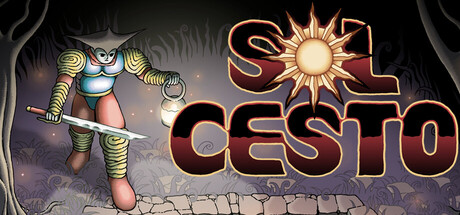
Sol Cesto is a turn-based roguelite where you pick a hero and climb toward the sun through a dungeon laid out on a 4x4 grid. Each room hides an outcome, and much of the play is reading probabilities: you stack odds on a safe tile, weigh what a room is likely to hold, and act on the result. Between runs you spend cursed teeth and stars to unlock upgrades and new characters, from a peasant to a vampire to a wizard, each with their own reason for making the descent. Runs last roughly 30 to 60 minutes, and full completion is reported around 20 to 40 hours.
Verdict
Sol Cesto looks like almost nothing else, and the loop of weighing odds against a stylised, cursed dungeon has genuine pull once you learn its rules. The trouble is how often the dice betray a good read, and how a run of up to an hour can't be saved or its animations skipped, which turns polish into friction. Players who click with the probability game and the art will find dozens of hours here; those who bristle at randomness or want quality-of-life will bounce off the same walls. A strong, singular game with rough edges it should have sanded before launch.
You'll like it if …
- +you enjoy reading probabilities and pressing a bet when the odds are decent
- +distinctive, grotesque hand-drawn art is a big part of what you play games for
- +you like relearning a dungeon from scratch with each new character
You'll dislike it if …
- −a coin flip going against you after careful planning ruins the run for you
- −you need to pause and save mid-session
- −you tire quickly once the unlocks are spent and the loop repeats
Breakdown
- +The loop of stacking odds and reacting to what a room reveals rewards players who learn its probability rules
- +With enough understanding of the systems, experienced players say almost every run becomes winnable through play rather than luck
- +Each hero plays to a genuinely different plan, so switching characters changes how you approach the grid
- −The RNG can override careful planning: an 80% safe tile still lands on the outcome that kills you often enough to sting
- −Some rooms are statistically weighted to end a run regardless of preparation, which reads as unfair rather than tense
- −Slow animations sit between you and the next decision and drag the pacing of a run
- +Hidden secrets and puzzle-like encounters reward players who experiment past the first dozen hours
- +Meaningful character differences give a real reason to relearn the dungeon from a new angle
- −Once the meta-unlocks are done, the late game turns into grinding wins with different heroes
- −Content ceiling arrives for many around 20 to 30 hours, after which runs start to repeat
- +Each hero carries a distinct motive for chasing the sun, which pushes you to try all of them
- +Worldbuilding surfaces gradually through encounters and environmental detail rather than exposition
- −The lore stays thin, and players wanting a proper account of the world, its beasts and characters are left wishing
- +The art direction is the standout: a grotesque, medieval-meets-mesoamerican style with dithering that players compare to Felix Colgrave
- +Animation quality and sound design carry real atmosphere
- −Animations can't be skipped, so by your fifth run you're spam-clicking through them
- −Occasional visual bugs and soft-locks, though they rarely wreck a session
- +The moment-to-moment presentation is polished enough that the missing conveniences feel like oversights, not neglect
- −No in-run save means abandoning a 30 to 60 minute run if you have to stop
- −Clickthrough bugs register your input but do nothing, which is dangerous in a game of narrow odds
- −No cloud saves, some crashes, and character balance that several players call badly off
score