"Deepest wizard-building in the series, guarded by a merciless opening"
About
Rift Wizard 3 is a turn-based roguelike where you play a lone wizard descending through 20 procedurally built floors, each a compact grid you fight across one move at a time. There is no auto-attack and no filler: every step and every cast counts, and death ends the run. The draw is the build system, with 186 spells and an equipment crafting layer that lets you stack effects into synergies rather than following a fixed class. This third entry drops most consumables and meta-progression from the earlier games, so a run lives or dies on what you find and how you combine it. It is in Early Access and still being expanded.
Verdict
This is the most ambitious Rift Wizard yet, and when a crafted synergy finally clicks and a floor melts, the combinatorial depth justifies every menu you had to wade through. The new art and music are a clear step up, and the search tool makes the huge spell list manageable. What holds it back is how much it demands upfront: no meta-progression to cushion a run, an opening curve that can end you before a build exists, and a UI that assumes you've done your homework. Still in Early Access, so the balance and onboarding may soften, but right now it rewards the committed and turns most others away.
You'll like it if …
- +you enjoy solving a fight by out-thinking the board one move at a time
- +you'd happily read spell descriptions for an hour to plan a synergy
- +you've played the earlier Rift Wizards and want a harder, denser version
You'll dislike it if …
- −you want meta-progression that softens a bad opening run
- −you bounce off games that explain nothing and expect you to dig
- −early runs ending to overwhelming spawns feels unfair rather than instructive
Breakdown
- +Small, readable maps turn each floor into a tight positioning puzzle rather than a slog across empty tiles
- +The core loop of picking spells and adapting to random pickup effects rewards reading the board over rote play
- +Enemy variety forces you to change plans mid-run instead of leaning on one opener
- −Early floors can swamp you with twenty enemies and a bomb spawner before any build comes together
- −A theorycrafted run often dies in the first three stages through no clear fault of your own
- −The difficulty spike lands hardest on newcomers who haven't played the first two games
- +The combination space between spells and crafted equipment is enormous, and finding a synergy that suddenly clears rooms is the payoff
- +Adapting a build around found components and pickup effects keeps runs from settling into one solved strategy
- −Of the 186 spells, a large chunk feel like padding that rarely justifies a slot
- −Dropping permanent progression means a rough opening RNG run gives you nothing to carry forward
- −The two prior games are close to required reading to understand what's going on
- +Scattered worldbuilding like Mordred's realm and the Archmage Trials gives the floors a loose framing
- −Story is barely present, and the in-game Wizard's Journal is thin enough that players single it out as useless
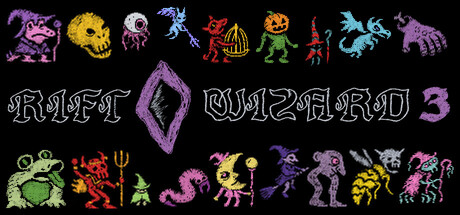
- +The new hand-drawn art replaces the old pixel look and reads cleanly at a glance during busy fights
- +The redesigned soundtrack draws repeated praise and sits well against the visuals
- +Board clarity holds up even when the screen fills with enemies and effects
- −At least one player reports crashes frequent enough to make the game unplayable in short bursts
- +The new search and filter system for spells and equipment is a real quality-of-life win for building synergies
- +Menu navigation and flow are smooth once you know where things live
- −The opening dumps a wall of information with almost no onboarding
- −Understanding which spells combine takes hours of reading, and some players call the UI outright hostile
score