"Charming witches and a killer soundtrack, roguelike depth left thin"
About
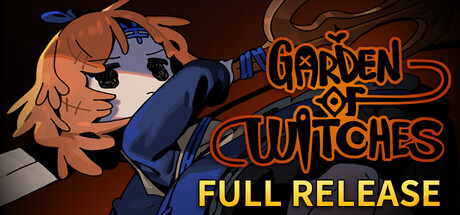
Garden of Witches is a hand-drawn action roguelike from Team Tapas. You play Sil, a witch tasked with tracking down her wayward coven and restoring the Garden across five story chapters plus epilogues. Each run sends you through isometric rooms of enemies, chaining fireballs, scissors and other spells against telegraphed attacks, with a dash and its brief invincibility window as your main defence. Before a run you pick a build, and upgrades between rooms tend to bump stats rather than rewrite how you fight. A hard mode and challenge mode extend the roster of content past the main story.
Verdict
Garden of Witches knows exactly what it is: a lovable cast, gorgeous hand-drawn work and a soundtrack that carries every room, wrapped around combat gentle enough for anyone new to the genre. The trouble is the word roguelike on the tin. Skills never talk to each other, Fireball breaks the balance, and the content runs dry inside a few sittings, so anyone chasing build depth will feel the walls close in fast. Take it as a warm, illustrated action game with roguelike trimmings and it's an easy recommendation at the price. Approach it as your next hundred-hour run engine and the seams show within an afternoon.
You'll like it if …
- +you want a short, charming roguelite you can finish rather than a hundred-run grind
- +art direction and a strong soundtrack pull you into a game
- +you're new to roguelikes and want telegraphed, forgiving combat
You'll dislike it if …
- −you play roguelikes for build variance and synergy hunting
- −one dominant weapon that trivialises fights ruins the challenge for you
- −runs that repeat with little variation wear you out quickly
Breakdown
- +Combat reads clearly: enemy attacks telegraph well and the dash i-frames make dodging feel fair
- +Simplified controls give roguelike newcomers a clean way in
- +Hitting things is responsive and the moment-to-moment strikes land with weight
- −Fireball is so strong it flattens most encounters into a single dominant tactic
- −Spells stay locked in their own class lane instead of combining, so builds rarely spark off each other
- −Late runs lean on stat scaling rather than tactical decisions, and most runs play out near-identically
- +Content is spread across epilogues and challenge modes beyond the five chapters
- +The fixed skill selection makes the game readable if you want a roguelite that stays legible run to run
- −Several players report seeing 80% of the content within a handful of runs
- −Upgrade pool and enemy variety are thin, so room layouts and choices start repeating fast
- −Removing randomness from skill selection strips out the variance that keeps roguelikes alive over dozens of runs
- −Build formulas become predictable once you find the strong picks
- +The witches are drawn with real personality, and the writing is warm and often funny
- +Japanese voice acting across the main chapters fits the characters and lifts the story scenes
- +Emotional beats land despite the short runtime
- −Voice acting drops out entirely once the epilogues begin, a jarring downgrade after chapter five
- −Story beats tend toward the straightforward and predictable
- +Art direction, character design and UI pull together into one coherent, appealing look
- +The soundtrack is a standout and carries the mood throughout
- +Menus and information stay clear and readable in the heat of a room
- −Framerate drops and stutter surface during some boss fights
- +Onboarding is smooth and the controls are easy to pick up
- +Stable for most players across the runtime
- −No key remapping, a real annoyance for keyboard players
- −Quitting mid-run doesn't save, so a boss stutter or an interruption can cost the whole attempt
- −Isolated bug reports alongside the boss-fight performance dips
score