"The Ceiling for Writing in Games, Sold by a Company That Doesn't Deserve It"
About
You play a detective with amnesia in the decaying city of Revachol, where you investigate a murder while managing your fractured psyche through dialogue and skill checks. Your character's thoughts—represented as distinct personalities you can engage with—influence how you approach conversations, clue gathering, and moral choices. The game unfolds almost entirely through dialogue trees and exploration, with dice-roll-based skill checks determining success rather than twitch reflexes.
Verdict
Disco Elysium is the best-written game ever made, a detective RPG where the dice rolls happen inside your own fracturing skull and every trash can hides a paragraph worth reading. The murder is almost incidental to the experience of being this ruined man for forty hours. Buy it knowing the original writers were forced out of ZA/UM and see none of your money.
You'll like it if …
- +you treat a mailbox or trash can as a paragraph worth reading
- +you want stat investment to reshape what you say rather than how hard you hit
- +failed rolls that bend the story sideways appeal more to you than reloading for success
You'll dislike it if …
- −you want moment-to-moment action over reading
- −you expect choices to swing outcomes rather than colour flavour and dialogue
- −you need an early hook instead of a slow text-heavy opening
Breakdown
- +Skill checks determine outcomes through dice rolls rather than reflexes, putting mechanical weight on character build and dialogue choice
- +Failure advances the story sideways instead of halting it, making save-scumming counterproductive to discovery
- +Character building changes who you are rather than how hard you hit, making each stat investment reshape available conversations and inner voice influence
- −The first two days are a slow, text-heavy wall before momentum builds
- −No combat or system depth to fall back on if reading isn't appealing
- +The 24-voice skill system externalises your psyche into competing personalities, each lobbying during conversations and checks
- +Multiple playthroughs surface genuinely different conversations and routes, with a second run revealing threads missed on the first
- +Forty-plus hours of dense writing at this price point is substantial value for the content delivered
- −The linear spine of the murder case stops it being endlessly fresh across replays
- −Choices often shape flavour and dialogue more than they change outcomes
- +Writing that turns clicking a mailbox into a genuine event, with prose lurching from absurd comedy to grief without losing footing
- +Revachol feels like a complete, aching universe built from a few streets and handful of characters, with environmental detail that hides paragraphs worth reading
- +Nothing else in the medium writes like this; it is the high-water mark for game narrative
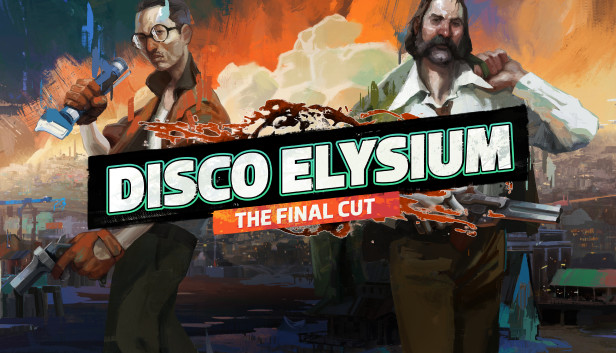
- +Hand-painted, oil-smear expressionist art is inseparable from the writing's mood, all bruised colour and weary architecture
- +Full voice acting in The Final Cut gives every inner skill and street character a distinct presence
- +The moody score earns its melancholy and is part of why the world clings to players
- +The Final Cut is a stable, fully voiced revision of an already careful release
- −Recent patches shove an advert for an unrelated ZA/UM game onto the menu, blemishing an otherwise tidy package
score