"Grid-tablet build-crafting that soars solo, drops the run in co-op"
About
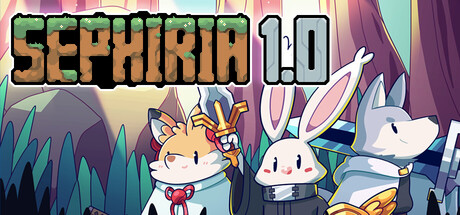
Sephiria is a top-down action roguelite from TEAM HORAY, the studio behind Dungreed. You play a bunny hero descending a tower to keep Bunnyville safe, clearing procedurally arranged stages full of demons across several acts. The hook is inventory management as build-crafting: artifacts and weapons occupy cells on a grid tablet, and where you place them and how they touch decides which synergies fire. Between runs you spend meta-currency and unlock destiny inscriptions, then push into hard mode with tunable modifiers for trap, enemy damage, and enemy health. It supports solo play and four-player co-op.
Verdict
Sephiria takes the tight action of Dungreed and hangs a real decision layer over it: the grid tablet makes every artifact a placement problem, and the payoff is a build sandbox wide enough to reward hours of experimenting. Solo, it's an easy recommendation, snappy to play and generous with viable playstyles until the late-game scaling starts closing doors. The trouble is the co-op the store puts front and centre, where a single dropped connection ends the whole run and freezes leave players stranded. Fix the netcode and the controller mapping and this climbs higher; as it stands it's a strong single-player roguelite with a shaky multiplayer promise.
You'll like it if …
- +you want to spend runs arranging relics on a grid to chase synergies
- +you liked Dungreed and want a deeper loadout layer on top
- +you enjoy tuning difficulty modifiers to test theorycrafted builds
You'll dislike it if …
- −you're buying it mainly for stable four-player co-op
- −you want procedural runs that constantly surprise you
- −slow, unskippable cutscenes wear on you
Breakdown
- +Combat lands with weight, and each weapon archetype (greatsword, artillery, frostsmith, lightning shinobi) reads distinctly in the hand
- +Responsive controls carry the moment-to-moment clearing of demon waves
- −Parry and dodge inputs sometimes drop, so defensive timing you executed correctly still fails
- −Sword-and-shield attacks nudge you forward on every swing, which throws off positioning
- +The grid tablet turns loadout into a puzzle: relic placement and adjacency drive synergies rather than a flat stat list
- +Build range is genuinely wide, from an unbreakable-shield guardian to a ranged bomb-lobber to an AFK-viable damage aura
- +Hard mode and difficulty modifiers give theorycrafters knobs to keep pushing
- −Late-game scaling squeezes the viable archetypes, so the freedom the systems promise narrows as you climb
- −Procedural runs rarely surprise; the layouts and drops feel more assembled than discovered
- +The tower's world and bunny cast have more charm than the setup suggests, and some players got pulled in further than expected
- −The chosen-one framing is stock, and cutscenes crawl with no way to skip them
- −Chapter 5 and the true ending sit awkwardly against the gameplay rather than paying it off
- +Pixel art and character design are the standout, consistent and appealing across heroes and enemies
- +The soundtrack lifts during fights and settles between them
- −Translations wobble, with inconsistent names and phrasing that still need tightening
- −Co-op sessions suffer desync and lag that muddy the presentation online
- +The inventory and artifact menus are clean and readable despite the density of the grid system
- +Solo runs stay stable with acceptable load times
- −Controller support falters: mapping is awkward and there's no independent cast key per spell
- −Co-op stability is the weak point. A disconnect forfeits the entire run with no rejoin, and mid-run freezes lock out players
- −Post-1.0 crashes still surface for some
score