"Co-op rebuilding clicks with friends, grinds alone"
About
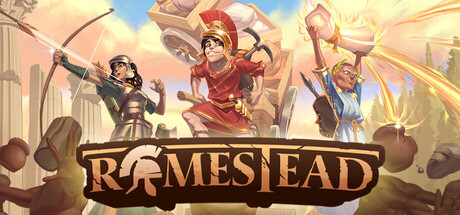
Romestead drops 1 to 8 players into a Roman world that has collapsed into a zombie apocalypse. You clear the undead, gather wood and stone, and rebuild a settlement that runs on recruited villagers: shopkeepers, farmers, traders, and haulers who keep your trade routes and food chains moving. Construction uses a rhythm mini-game, progression is gated behind Terraria-style bosses like the cyclops and a lava boss in the volcanic biome, and a deity altar grants favor, fast travel, and skill upgrades. Wheat becomes flour becomes bread, carts chain together to move resources, and around the twenty-hour mark you unlock automation. It is in Early Access, so systems and content are still being filled in.
Verdict
Romestead has the bones of something many co-op groups will sink long evenings into: the combat, the building rhythm, and the steady pull toward the next boss all click when you play with others. Solo players get a harder, grindier version of the same game, and everyone runs into recycled dungeons, three biomes stretched too thin, and the occasional vanished gravestone or unloadable world. The developers are clearly engaged and fixing things fast, which matters for an Early Access title at this price. As it stands it is a confident recommendation with caveats, best taken with friends and a tolerance for unfinished corners.
You'll like it if …
- +You want a survival-craft world to settle into with a group of up to eight
- +You enjoy slow village logistics and chasing the next boss-gated tier
- +You can forgive rough edges on an Early Access game that is patching weekly
You'll dislike it if …
- −You play solo and expect the balance to respect that
- −Procedural worlds that repeat the same dungeons and biomes wear you down
- −Losing inventory to a bug is a dealbreaker for you
Breakdown
- +The fight-gather-build loop moves between hack-and-slash combat, exploration, and resource runs without friction
- +Boss gating gives each tier of progression a clear goal, from the cyclops to the volcano
- +No tool durability, so gathering never stops to babysit your equipment
- −Solo play feels tuned for a full lobby; resource demands outpace one pair of hands
- −Mob aggro reaches across the whole screen, dragging enemies onto you mid-build with no clean way to disengage
- −The volcanic biome's mob density turns into a spike that feels punishing rather than earned
- +Villager management, deity favor, skill trees, and trade logistics give the settlement real moving parts
- +Automation unlocking near twenty hours opens a second layer for players who push past the early grind
- +Weapon, armor, and trinket tiers support ranged, defensive, and magic builds
- −Procedural dungeons recycle the same four or five layouts, so exploration goes stale fast
- −Only three biomes carry the whole map, and a large world just repeats them
- −Settlement economy and base building stay thin behind the menus; gear bonuses like +2% damage barely register
- +The fallen-Rome-meets-undead premise and the restoration of old gods give the world a hook
- +Deity progression and NPC dialogue drop in light story beats as you rebuild
- −Story is barely present and clearly waiting on post-Early-Access content
- +The pixel art is clean and charming, and hits land with responsive feedback
- +The soundtrack stays quietly in the background without grating
- −Dry desert regions look flat and under-detailed next to the rest
- −Missing lighting and repeated sprite work flatten some areas
- +Developers have shipped fixes and quality-of-life changes since day one of Early Access
- +The core loop onboards clearly; load times and general stability hold up
- −Controller support is broken, and Steam Deck players report being stuck unable to equip items at the start
- −Deep systems like the altar, trading camps, and recipe requirements go largely unexplained
- −Gravestones vanishing and worlds that stop loading put save integrity in doubt and wipe out hours of work
score