"Wiring chain reactions that pay off, once the bugs settle"
About
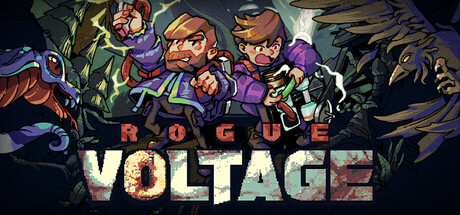
Rogue Voltage is a roguelike deckbuilder where combat runs on wiring, not cards in the usual sense. Each turn you connect modules with wires on a board, feeding triggers into other triggers to set off chain reactions that hit the monsters in front of you. You spend a currency called plasma to buy and slot new modules, pick from nine-plus characters whose skills reshape which builds are viable, and push through boss fights across Normal, Hard and Impossible difficulty. Between runs you build up a camp for meta-progression. It launched into Early Access.
Verdict
Rogue Voltage has one of the more original combat ideas in the deckbuilding space: you don't play cards, you wire a machine and watch it cascade. When a build comes together the payoff is real, and the sound design makes every rewire feel good. The problems are the kind Early Access should fix: imprecise clicks, a cramped UI, save corruption and alt-tab bugs that end runs. The systems also thin out for some players once they've seen a handful of characters. Worth buying now if the wiring concept excites you, worth watching if you'd rather wait for the polish.
You'll like it if …
- +You enjoy tinkering with a build until the chain reaction fires exactly right
- +Optimisation puzzles inside a single turn appeal more to you than fast reflexes
- +You're comfortable with an unfinished game that patches over time
You'll dislike it if …
- −Fiddly manual micromanagement wears you out rather than drawing you in
- −You want a story or memorable enemies to carry a run
- −You need a polished, crash-free build before you'll commit
Breakdown
- +Wiring triggers into other triggers to fire off a long chain reaction is the hook, and when a build clicks it delivers a genuine puzzle-solving high
- +Every turn hands you real decisions: wire, rewire, reposition modules before you commit
- −Late-run boards drown in wire micromanagement, and what felt clever early turns into bookkeeping
- −Click detection is imprecise enough that players report firing modules instead of wiring them on a misclick
- −Early runs punish hard before meta-progression softens the difficulty
- +Character skills interact with modules in ways that genuinely change which builds work, feeding replay value
- +The combination space of modules and wires supports more elaborate builds than most in the genre, sometimes within a single turn
- −Some players hit a ceiling around the seventh character and find the systems thinner than they first seemed
- −Optimal lines can collapse into repeatable cheese once you know them
- +Character personality comes through in how each one plays rather than through text
- −The story mode is thin and the enemies do little to hold interest
- −Cinematics feel oversized next to how little narrative content backs them
- +Pixel art holds together as a consistent look
- +The sound effects sell the wiring: players describe the clatter of rearranging circuits as a pleasure in itself
- −The UI is cramped and hard to read, with overlapping elements and unclear tooltips
- −Black screens after the splash on Steam Deck and crashes on alt-tab cut sessions short
- +The core loop is legible enough that players who push past the opening keep sinking long hours in
- −Save corruption, freezing and a tutorial that can lock you on the loading screen are all reported
- −Alt-tabbing breaks menu navigation until you restart
- −Missing quality-of-life staples: no undo, no speed control, no quick-sell binding
- −Base camp is a chore to navigate with a controller, especially on Steam Deck
score