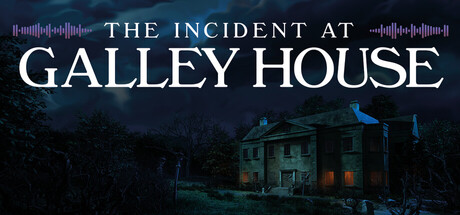
"A period whodunit with a playback machine that grips"
About
It's 1936, and something violent happened at Galley House. Decades later you're handed a device that plays back echoes of the past, and your job is to reconstruct who did what to whom. Minute to minute you watch scenes replay, match faces to names and names to rooms along a timeline, then commit your conclusions in a built-in notepad. It's a deduction mystery in the mould of Return of the Obra Dinn and The Case of the Golden Idol, and it bundles the full story of the developer's earlier game Type Help alongside a new second act. A hint system stands ready if you get stuck.
Verdict
As a deduction mystery this is close to the top of its class, with a playback machine that turns investigation into a physical act and voice work that carries every scene. The trouble sits in the ending: the supernatural turn either recolours everything that came before or unravels the fair-play logic, depending on the player, and the game never fully commits to rules you can reason against. The onboarding and note-taking friction are real but small next to how satisfying the core detective work feels. If you can accept that the last act trades clean logic for atmosphere, this is a case worth cracking.
You'll like it if …
- +you love piecing names, faces and timelines together the way Obra Dinn asks
- +you want a focused, self-contained case rather than a sprawling web of side threads
- +atmosphere and performance matter to you as much as the puzzle
You'll dislike it if …
- −you need a mystery whose logic holds airtight to the last clue
- −supernatural explanations feel like a cheat to you
- −fiddly menus and poor onboarding sour an otherwise good experience
Breakdown
- +The deduction loop rewards attention rather than guesswork, and the difficulty rarely tips into being unfair
- +Finding the next scene stays a small puzzle in itself, so you seldom sit fully stuck
- +The playback machine reads as an object you operate, not a menu you click through
- −The investigation phases can turn repetitive, with the interaction model grinding a little during busywork
- −Some players finish feeling they solved a worksheet, without the click of a real revelation
- +The new second act gives returning Type Help players a genuine reason to come back, not a cosmetic reskin
- +Focused and tightly built, it wastes little on filler threads
- −Slimmer than The Roottrees are Dead, with fewer branching paths and optional strands to chase
- −Several story threads are set up and then left dangling with no payoff
- −Players hunting for hidden narrative layers will find the surface thinner than the setup promises
- +The central hook and locked-house atmosphere land, with obvious debts to And Then There Were None
- +Character writing carries real menace when the mystery is in motion
- +For some, the late supernatural turn retroactively explains the odd early moments
- −The supernatural resolution splits players hard, and a good share find it incoherent
- −The rules around memory, death and cause are too loosely defined to hold up as fair-play deduction
- −The chain of reasoning sometimes bends to serve the plot rather than any consistent logic
- +Voice acting and direction draw near-unanimous praise, and it does heavy lifting for the mood
- +Art direction and sound build a period atmosphere that stays taut instead of dragging
- +The diegetic interface, presented through the machine itself, sells the fiction
- −Character portraits are static, limited to a few poses, though the machine framing softens the oddity
- +The hint system is calibrated to nudge without spoiling, a rare balance for the genre
- +The notepad and portrait tools keep your evidence organised without leaving the game
- −Onboarding and menu navigation draw repeated complaints, with features players never discover
- −Taking notes can accidentally trigger scene interactions, muddying careful investigation
- −Scattered reports of Steam connection errors and graphics driver crashes
score