"Sharp cellular shooter with a save-eating bug it can't shake"
About
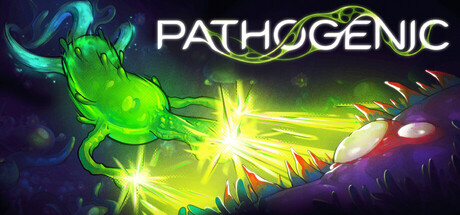
In Pathogenic you play a single pathogen loose inside a human body, working your way from cells and blood vessels toward the brain. It's a twin-stick roguelike: you steer with one stick, aim and fire with the other, and clear procedurally generated rooms while the host's immune system throws antibodies, projectile patterns and bosses at you. Between runs you collect organelles like mitochondria and flagella and slot them onto your organism to shape its weapons and movement, an evolution system that changes how each build shoots and survives. There's a daily-run leaderboard, a hardcore mode, an antibiotic difficulty modifier, a sandbox mode and local two-player co-op. The art leans into a pathology-slide look, with soft-body physics and a petri-dish palette.
Verdict
Pathogenic gets the hard part right: the shooting is crisp, the organelle builds genuinely rewire each run, and the pathology-slide world looks like nothing else in the genre for eight euros. The progression caps will annoy build-hunters and the back-half difficulty spikes bite, but those are quibbles inside a strong package. The real reservation is craft. Most players sail through, yet a stubborn set of crashes and save-eating bugs, some tracing back to the demo, still catches people out. Fix that tail and this sits near the front of the twin-stick pack.
You'll like it if …
- +You want a twin-stick roguelike where reshaping your organelle loadout changes how every run plays
- +A striking, unusual art style matters to you as much as the shooting
- +You'll chase a daily leaderboard and lean into hardcore modifiers once the base game clicks
You'll dislike it if …
- −Per-organism unlock grinds and capped progression put you off
- −You have no patience for difficulty spikes that arrive with forced movement and dense barrages
- −A save-corruption risk, however small the odds, is a dealbreaker
Breakdown
- +Twin-stick controls are tight and responsive, and the core clear-a-room loop keeps pulling you back for another attempt at the next organism
- +Enemy patterns and bosses are tuned to feel fair rather than cheap, so deaths read as fixable mistakes
- −Later levels combine cramped maps with forced movement, fast snipers and crossfire barrages, and the spike catches players off guard
- −Damage hitboxes aren't always legible, so you take hits you can't see coming
- +Organelle placement produces a genuinely wide spread of weapon and movement builds, with multiple starting organisms to reshape a run
- +Daily leaderboard, hardcore and antibiotic modifiers give the systems somewhere to go past the first few clears
- −Per-organism progression caps and a limited organelle pool frustrate players chasing specific builds
- −Unlocking certain forms leans on grind that some find slow rather than earned
- +Each region commits to its anatomy: enemy patterns and bosses match the body part you're in, and the vessel-and-immune-system framing carries into the music and backdrops
- +A hidden brain level and lore tucked into environmental detail reward players who poke around
- −The playing-as-a-disease premise is more flavour than story, and the narrative scope stays thin
- +The pathology-slide art direction and soft-body physics give the microscopic world a look few twin-stick roguelikes attempt
- +Sound design and soundtrack draw repeated, specific praise across the reviews
- −Some players hit lagspikes and stuttering even on the lowest settings, especially over longer sessions
- +Most players report a polished run with clean UI and easy onboarding, and note post-patch performance improvements
- +Steam Deck support and cloud saves are present
- −Hard-freeze crashes carried over from the demo remain unfixed for a minority, occasionally ending runs outright
- −Cloud saves corrupt across devices on Steam Deck, and a wall-collision bug has deleted save files
- −Unlocking the brain level is unintuitive enough that players miss it without help
score