"Salvaging derelicts thrills, until a bug eats your save"
About
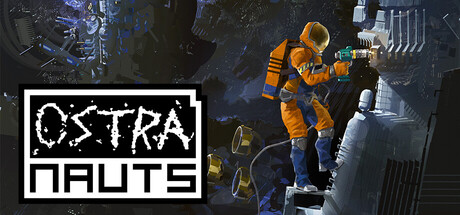
Ostranauts drops you into a decaying solar economy as a licensed scavenger, five thousand credits in debt and one salvage permit to your name. You fly a scrappy ship into a boneyard of abandoned vessels, cut them apart for parts, and decide whether to weld the loot onto your own hull, sell it for fuel and air, or trade it off against the money you owe. Every ship is a working machine of oxygen and nitrogen mixes, reactor loads, power routing and wiring, all of which you manage by hand from a top-down view. Death is permanent, and NPC crew can be hired to help run the boat. Story missions exist but are thin; most of what happens comes out of the sandbox and your own mistakes.
Verdict
Ostranauts wants to be the space life-sim where you build, salvage and slowly asphyxiate on your own terms, and when the systems cooperate it delivers exactly that with writing and atmosphere few sims match. The trouble is how often they don't cooperate: crew AI you can't trust, automation that doesn't exist, and bugs that corrupt the saves you've poured dozens of hours into. Calling this a finished 1.0 is generous, and plenty of buyers say as much. There's a remarkable game here for the patient, but it asks you to accept the machine breaking around you.
You'll like it if …
- +You want a hard sci-fi sandbox where your own failures write the story
- +You enjoy learning obtuse, undocumented systems until they finally click
- +The manual grind of atmosphere, power and salvage reads as immersion to you
You'll dislike it if …
- −You expect crew you can delegate to and automation that lightens the load
- −A save-wiping bug after a long run would sour the whole thing
- −You want authored missions and clear onboarding over emergent chaos
Breakdown
- +The salvage loop has real weight: cut a derelict open, watch the atmosphere vent, decide what to strip before your own air runs low
- +Permadeath makes every decompression and every reactor misjudgement matter
- +Building and rewiring your ship gives you genuine ownership over the machine you fly
- −Crew AI is broken often enough that players report doing everything manually is safer than issuing orders
- −Nearly every system needs manual toggling, so routine tasks pile into constant micromanagement
- −Basic functions failing mid-run turns the intended tension into busywork
- +You can commit to salvaging, trading, combat piloting, crewing or full ship construction, and each holds hundreds of hours
- +The atmosphere, power and reactor systems interlock in ways that reward learning them
- +Obfuscated mechanics become part of the appeal once they click for the players willing to dig
- −Automation is essentially absent, which caps how far the late game can scale before it becomes chores
- −NPC interactions are rigid and boxed in, limiting the crew and social layer
- +The hard sci-fi writing and dystopian setting land hard, with reviewers singling out the atmosphere and prose
- +The strongest stories are emergent: a botched salvage or a slow suffocation becomes your own noir tragedy
- +Music and art support a coherent sense of scraping by at the bottom of the system
- −Scripted story missions are sparse, so players who want authored plot rather than self-made drama get little
- +The grungy console aesthetic, all knobs and switches and worn panels, fits the setting well
- +Sound design and soundtrack are consistently well received
- +Performance holds up for most players
- −The pixel clutter on ship floors makes it hard to tell salvage from junk
- −Some find the mix of art styles and dense UI simply confusing to parse inside complex interiors
- +The rough edges suit the theme well enough that some players forgive them
- +Load times and crashes draw fewer complaints than the other faults
- −Save-corrupting bugs are reported repeatedly, wiping long runs
- −AI pathfinding breaks and characters die to glitches rather than decisions
- −The tutorial leaves the learning curve steeper than it needs to be
- −Many reviewers judge the 1.0 release to have arrived at least six months early
score