"Absorbing enemies as your kit, across too many jumps"
About
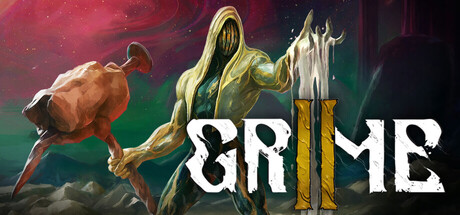
GRIME II is a 2.5D action metroidvania and the follow-up to Clover Bite's 2021 debut. You play a form-stealer in a surreal world built around art and living matter, launching tendrils of hands to absorb enemies and then summoning molds, temporary transformations that let you fight using a slain foe's moveset. Combat leans souls-like: you parry, dash-counter, and manage a force meter that replaces the usual stamina bar, while traversal opens up through wall slides, tethers and other movement upgrades. Exploration is nonlinear across an interconnected map, with attrium currency for upgrades, multiple endings and an NG+ mode.
Verdict
GRIME II builds on its predecessor where it counts. The parry-and-force combat feels sharp, the molds give absorbing enemies a real payoff, and the grotesque worlds are among the most striking in the genre this year. The friction is the platforming, which spreads into the late game and starts to feel like padding, and a map so large it empties out between the good bits. Fans of the first game and of souls-likes with teeth will find plenty here worth the reach; just know you'll be jumping across more gaps than you might want.
You'll like it if …
- +You want a souls-like metroidvania where beaten enemies become part of your kit
- +You linger over atmosphere and a soundtrack as much as the fighting
- +You enjoy hunting down secrets across a sprawling, nonlinear map
You'll dislike it if …
- −Precision platforming between fights wears you out fast
- −You want a compact map with little backtracking
- −Chatty NPCs and slow story delivery break your rhythm
Breakdown
- +Parrying, dash-counters and the force meter make combat read as fast and deliberate at once
- +Molds turn every defeated enemy into a temporary moveset, so fights feed directly into your options
- +Traversal upgrades like wall slides and tethers keep movement fluid rather than a chore between rooms
- −Platforming gets pushed into nearly every corner of the late game and tips into tedium
- −Some jumping sequences feel unfair rather than demanding
- −Checkpoints sit too far from the platforming stretches they gate
- +Wide weapon and spell pool, from the barbed knife outward, supports different approaches
- +Molds plus attributes like pliability give build variety real reach
- +NG+ and multiple endings extend a run well past the credits
- −Several players find stat upgrades cosmetic, changing numbers without shifting how you play
- +The art-obsessed world holds together as an atmospheric, lived-in place
- +Meta-narrative layers reward players who dig into the lore
- −The story lands softer than the first game for returning players
- −NPCs overstay their welcome, dumping dialogue that drags the pacing
- +Backgrounds and area design draw near-universal praise for their grotesque beauty
- +The soundtrack carries real weight and sits well against the visuals
- +Hit feedback and VFX make the combat feel as good as it looks
- −Occasional visual glitches, including at least one report of falling through the map
- +Boss runbacks are short, so death rarely means a long walk
- +Deaths read as your own mistake rather than the game cheating you
- −The map runs excessively large and often empty, and you can exhaust all 100 markers
- −Layouts turn maze-like enough to lose your bearings
- −Movement and physics show occasional jank
score