"Boss rush that shines, then hides its ending behind no-hit runs"
About
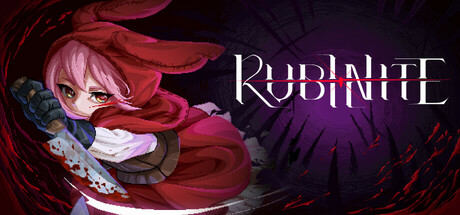
Rubinite is a boss rush action RPG set in the ruined Scarlet Kingdom, a dark fairy-tale world with clear Red Riding Hood echoes. You play Ruby, whose crimson eyes reveal the weak points on bloodstained monsters: you focus to expose them, then thrust to shatter. There are no journeys between fights and no run-back penalty, so you throw yourself at each boss again and again, retreating to a hub to spend upgrades and slot talismans that reshape your kit. Clearing the game once unlocks a harder second playthrough where a no-hit run of the bosses gates the true ending and the remaining story.
Verdict
Rubinite gets the important thing right: exposing a weak point and shattering it never stops feeling good, and the instant restarts turn a punishing boss rush into something you keep pressing into. The pixel art and boss themes punch well above what a small team usually manages. The sticking point is structural. Hiding the true ending behind a complete no-hit run splits the audience cleanly, and where you land on that is where the score lands for you. The hitbox debate is real too, but the design underneath is confident enough to survive it.
You'll like it if …
- +You want a boss rush where dying costs seconds and the next attempt starts immediately
- +A no-hit challenge run reads as a reward to you, not a chore
- +You like combat that asks you to watch and time rather than trade blows
You'll dislike it if …
- −Locking story and endings behind mastery runs feels like busywork to you
- −Inconsistent dodge windows sour a game for you rather than becoming a puzzle to solve
- −You want systems that keep evolving instead of a tight loop repeated at higher stakes
Breakdown
- +The focus-and-thrust loop rewards reading a boss rather than mashing: spot the weak point, commit to the strike, feel it break
- +No run-back and instant restarts mean a death costs you seconds, so throwing yourself at a wall stays productive
- +Bosses are built around the core mechanic instead of around it, giving each fight its own rhythm
- −Hitboxes split the room: some read dodge windows as deliberate, others call them oversized and inconsistent
- −The lock-on narrows your view and can work against you in the busier fights
- +Talismans and skills let you tune Ruby toward your own approach to a pattern
- +Leaderboards and S-rank targets give the highest-level players a reason to keep sharpening
- +The second playthrough genuinely raises difficulty and adds story rather than reskinning the first
- −Locking the true ending and half the lore behind a full no-hit run reads to many as padding, not challenge
- −The hub scenes barely change on the return trip, so the repeat feels like the same road walked twice
- +A compact dark fairy tale told mostly through animation and setting, with warmth under the gore
- +Character writing lands and the world sells itself without leaning on dialogue dumps
- −Early dialogue repeats itself, one talkative lizard especially, and progress can force you to quiz NPCs
- −The first ending lands flat when the real payoff sits behind the no-hit wall
- +Pixel art and animation are expressive and detailed, with anime-tinged direction that carries the whole kingdom
- +Boss themes hit hard and match the escalation of each fight
- −Outside the boss themes the soundtrack fades into the background
- −A crash tied to the black-and-white sequences is reported, and older machines can struggle
- +Full button remapping and near-instant retries make the no-hit grind bearable
- +The focus mechanic is cleanly integrated and the UI stays out of the way
- −Mandatory tutorials interrupt the pacing and grate on players who want to fight
score